
Kanhaiya Kumar is India's latest political rockstar. More so in Mumbai, where his address this evening gave Mumbaikars a glimpse of the heydays of the Communist movement in the city of textiles mills and mill workers.

The bravado of NDA ministers may have undone the gains made in cross-border security cooperation over the past several years.

"Will anybody want a servant that who is on vacation when needed at home? And nobody knows where he is," he continued.

PM Modi's China visit may strengthen ties between both the countries.

'If the dimensions of the strategic partnership worked out by India and the US seem like a grand alliance targeted at you-know-who, China had better realise that it has fathered it,' says B S Raghavan, a long time observer of China.

Manipur needs an integrated politico, military, socio-economic approach, says Sanjeev Nayyar.

'The diplomat's arrest has led to a major diplomatic spat, the likes of which I have not seen in my nearly three decades of covering the US-India relationship, says Aziz Haniffa. 'The knee-jerk reaction by the powers-that-be in Delhi was myopic to say the least.'
'Lending to Mr Mallya was the bankers' season ticket to corridors of power and glamour. Borrowing from them was like a favour Mallya did to them,' says Shekhar Gupta.

Israel is no longer the valiant and beleaguered underdog, but increasingly seen as an increasingly arrogant oppressor seeking to crush another old nation under its jackboots, says Mohan Guruswamy.

In his last column for Rediff.com, Praful Bidwai joins issues with those lauding India's covert operation against Naga rebels based in Myanmarese territory.

Empowered in the Modi government, junior ministers have enough on their plate.

'India is so poor that political parties will not be able to wipe out poverty from our country in another 100 years. I am of the opinion that development can come only through corporates.' 'Tomorrow, if Tata or Birla or Reliance takes up another 500 panchayats, it will boost the Indian economy also.' Sabu M Jacob, managing director of the Kitex group whose NGO Twenty20 has just won a panchayat election in Kerala, speaks to Shobha Warrier/Rediff.com

Ravindra Shukla picks out his best option.
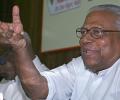
'I told him when I started my political career seven decades ago he was not even born. His political activities, the protests he organises and the way he fights the biggest corporate of India, the Ambanis, give hope to all people who are progressive. My desire is that such a party must grow, and I wished him all success for its growth.' V S Achuthanandan, the senior-most Communist in India, tells Rediff.com's Shobha Warrier why he turned down Arvind Kejriwal's invitation to join the Aam Aadmi Party.

While Rajnath Singh said secularism was the most misused word in politics, Sonia alleged that ideals and principles of the Constitution were under threat and being attacked deliberately
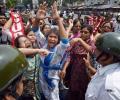
Ten trade unions with a combined membership of 15 crore workers in public and private sector, including banks and insurance companies, are on a nationwide strike to protest against changes in the labour laws.

There are signs of China's external behaviour becoming more aggressive in the coming years. If that happens, strategic implications for neighbours having territorial disputes with China can become deeper and imperatives can rise for the former to counteract, says D S Rajan

Criticising various provisions in the proposed GST regime, Moily said it will be a "technological nightmare" and the anti-profiteering provisions in it are "far too draconian."

Partial dismantling of subsidies, movement towards a more transparent policy on natural resources and moves to make India more inviting for foreign investors, are some of Modi government's big achievements.

'The biggest advantage for India was its seasoned and experienced political leadership who had spent decades struggling against the Raj and had spent years behind bars.' 'Not a single prominent leader of the Muslim League spent one day in jail.' 'Gandhiji, Nehru and Sardar Patel were intelligent, shrewd men with their hands on the popular pulse.'

Why does this Kerala district see so many political murders and revenge killings?

'Is it a crime to be inspired by the Left ideology? Why can't I read a book on Marxist philosophy? Is it banned in India?'

'It is imperative to restore the dignity and authority of the services chiefs. Erosion of this has resulted in lowering of service efficiency. It is also time to end the practice of taking seniority as the sole criterion for appointing chiefs.'

Indian intelligence agencies have often claimed that left-wing extremists are trying to make inroads in the militancy-hit regions of north-east to foment further unrest. But Jaideep Saikia, noted terrorism and conflict analyst, claims, "People who speak of Maoism taking roots in the north-east have not read history".
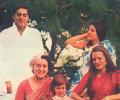
'I do not think Rajiv Gandhi at that stage had any influence on his mother. Indira Gandhi relied totally on Sanjay and she looked upon him as a dependable son.' 'What really affected people and eventually Indira Gandhi was the sterilisation drive. She lost so badly in north India because of these drives.' 'She is the one who has given this aura of 'the family' to the Gandhis.' The second and final part of veteran journalist Coomi Kapoor, whose book The Emergency: A Personal Account was published recently, to Sheela Bhatt/Rediff.com about Independent India's darkest phase.
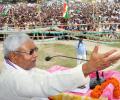
Bihar Chief Minister Nitish Kumar attacks the BJP, saying that its only intention is to capture absolute power.

'Let us also not expect that there will be a clean break with the past, much though the new government might like to think about it. In a functional democracy that is neither feasible nor desirable. But basic change it must be,' says Shreekant Sambrani.
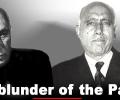
Nehru's sentimental attachment to the Mountbattens deeply vitiated the Kashmir issue. It was certainly the most important factor for the failure to find a solution in the first years of the conflict.

'The year in pictures' treks across the globe, looking back on the moments that shaped 2016. From the United States presidential race, to demonetisation in India to the refugee crisis, the news has kept pouring in. Here are our top 50 moments from the world.
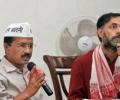
'Arvind's face fell... He started to say something, but couldn't continue. He broke down and as the tears fell unheeded, he crumpled to the floor.'

'Narendra Modi has had very good luck. Firstly, the fall of oil prices. You don't get that very often in your life and you certainly don't get that often when you are in government.' 'Secondly, the fantasy of Indian reforms has led to very strong capital inflows to have made his job much, much easier.' 'You ride the winds in times of fortune and he hasn't done that. At least, not yet.' 'Those winds of fortune which are blowing your way can certainly turn around easily. There are quite a few headwinds coming up. He may well, history will show, have missed the opportunities that existed.'

The public-private partnership model is a compulsion, says the minister.

'In the first meeting of this new year, we took a joint new year resolution that we will complete it this year. At the time things were not very clear, but the mood was clear that yes, we must resolve it.' 'Yes, details have to come out, but there are some sensitivities, there are some stake-holders not yet on board, especially other Naga undergrounds etc, we would like them to come on board... So at a proper time it has to be revealed to the country, and to the legislature. Perhaps, we may have to wait for some more time.' 'With better understanding of the Indian system, many of them have learnt, realised, appreciated that Naga nationalist aspirations can be accommodated in the Indian system. The Indian system is pretty comprehensive and flexible.' 'A Naga has as much stake, claim over India as any other Indian. There is no distinction. This, Nagas have realised, that yes, Naga nationalist aspirations and Indian nationalism are not mutually exclusive.' Ravindra Narayan Ravi, the Government of India's Special Interlocutor for the Naga talks, explains how the Naga Peace Accord was reached in an exclusive interview to Saisuresh Sivaswamy/Rediff.com
